

All I really really want is locative food
October 1, 2005
)
That is, food that tells me where I am and where it’s from by it’s very name and nature (without the use of an RFID tag). And all I really really want is to have one major train station and one major airport in one country that sells food that is not created by food product designers but by local people from local ingredients and reflecting the diverse local food culture already present.
Imagine Amsterdam’s Schiphol Airport… Could the experience of Schiphol be enriched if you knew that this was the only airport in the world where you could exclusively buy locally grown and produced Dutch food and regional specialities? Was it already one and a half years ago that Doors of Perception and Urban Unlimited organised a cultural experts meeting for the city of Breda, a new node on the line of the High Speed Train. If I recall correctly, we recommended just this very thing.
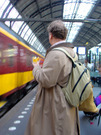
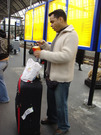

The images above were taken within a period of 4 minutes. Friday afternoon, chip eaters abound at Amsterdam Centraal Station. Just imagine the possible effect on the environment and the state of agriculture and upon the local economy if these chips were made from a diverse range of local potatoes, fried in oil grown and produced locally. Imagine if you could order chips from a menu sporting 8 different kinds of potato! Imagine if the product of the finger fried potato embraced diversity.
And then there’s the mayo…
And the knowledge economy that could sprout up from bringing the local boutique producer’s products to the transportation hubs of the world…
Frites eaters: images of people eating chips taken on Friday September 30, 2005 from 16:23-27 at Amsterdam CS and on the train to Rotterdam.
debra at 9:53 | Comments (2) | post to del.icio.us
Oh to utter the words, food design…
September 28, 2005
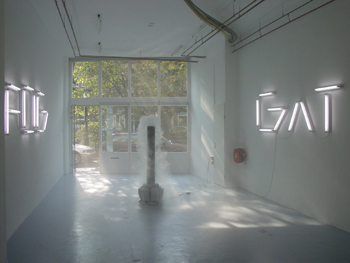
Well it’s about bloody time! Coinciding with all manner of design events going on right now in Amsterdam, the Stedelijk Museum hosted a symposium titled Food Design at the ubiquitous Club 11, featuring three speakers and three completely different interpretations.
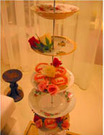
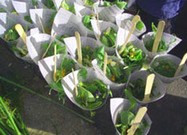
Marije Vogelzang (Proef) is doing some very interesting work from her studio slash catering laboratory and counts the stars of Dutch design (such as the Ladies Hella Jongerius, Marlies Dekkers and Li Edelkoort) amongst her clients. After a stunning portfolio presentation, I can’t wait to visit Vogelzang’s restaurant in Rotterdam Proef and get down to the business of tasting and nibbling. (Proef means ‘taste’ or ‘taste it’, in Dutch.) Vogelzang’s work is all about engaging the eater in the underlying concept of the food and its presentation. I loved her daring in a recent catering project in which she used WWII ration ingredients to invoke memories about this bleak period. She elegantly walks the fine line between being thought provoking and utterly disarming when she stated, ‘It’s design that someone puts in their mouth, and absorbs into their body. It’s all very intimate’. That’s what I call a laudable attitude!
Although it wasn’t the most pleasant message to hear, I can’t stop thinking about the corporate presentation by Hans van Trijp from Unilever. Food design according to the multinational means designing the market context in which a food product exists, and has very little to do with actual food. Van Trijp described Honig’s SpongeBob pasta as the perfect marriage of food design and marketing. Predictably, I found van Trijp’s take and food and food design extremely disturbing, but I am so very eager to get in touch with him to hear more of what he has to say about how multinationals, even when we wouldn’t dream of buying their products, influence our every day life right down to the iggly niggly bit of designing a country’s infrastructure. This means that while Marije Vogelzang is designing a lunch using ‘forgotten vegetables’, Unilever, by the very virtue of it’s market share, is determining which races of grains farmers will be growing and how food will be manufactured and distributed in decades to come. I just can’t help but think it’s a wise idea to keep in close contact with the suits. I’m just as much a stakeholder as the next Lady, right?
Ex-designer and unwitting stand-up comedian Marti Guixé as per usual wowwed the audience with a portfolio presentation of more than a decade’s worth of food-related projects. He is the well-known Catalunian ex-designer that has worked extensively with shoe brand Camper, and ultimately designed their flagship restaurant, Foodball, in Barcelona. Balls are something of a leitmotif in Marti G’s gastro-design as you can see from this author’s review. It might have been just the unfortunate lighting, but while presenting images of his ‘corporate sponsored food’, (in this case an omelette with a sauce-stamped Calvin Klein logo), Guixé claims to have noticed van Trijp’s lip twitch.
Although I’m not willing to spill the beans just yet, I am looking forward to Guixé’s collaboration with Mediamatic in just a few week’s time. Guixé and Mediamatic will be opening up a temporary restaurant in the basement of the former TPG builiding where you’ll… read about it in culiblog.
images from l to r: Vogelzang’s salad course of city leafy greens (served with grilled pigeon breast), hanging etagères made of 2nd hand plates designed by Vogelzang for Dutch fabric producer de Ploeg, Gin and Tonic Fog Party by Marti Guixé (artificial indoor fog made of gin and tonic at Casco, Utrecht). The above images are from the (ex-)designers’ websites, © and hopefully also courtesy of Vogelzang and Guixé.
debra at 9:03 | Comments (6) | post to del.icio.us
Fritz Haeg’s Edible Estates
homesteading on the suburban lawn
September 26, 2005
)
Start with one suburban home in Middle America (images of Salina Kansas Edible Estate © Fritz Haeg, used entirely with permission)
Situated on what was once a massive sugar beet plantation, the iconic housing development of Lakewood is an embodiment of an American Dream in which each single-family dwelling is presented on an ornamental carpet of manicured green. In the 1950’s, the Lakewood Park Company introduced assembly line housing developments to California constructing 17.500 homes on 3.500 acres in little over a year at a rate of about 1000 homes per month. In the last 3 months of 1950, families moved to Lakewood at a rate of 25 a day. Lakewood is now home to the Edible Estates regional prototype garden.
)
(image © Fritz Haeg, used entirely with permission)
In 2005, Edible Estates began transforming suburban lawns into spaces for food production, starting with the lawn of the Cox family in Salina, Kansas. The Edible Estate in Lakewood California is the home of the Foti Family who in 2006, de-lawned in favour of bio-diverse edible landscaping on Memorial Day weekend. The installation date couldn’t have been more apt, and images of WWII Victory Gardens spring to mind. But Edible Estate gardens are not simply rows of corn, beans and zucchini. In fact the gardens are highly designed, aesthetic spaces that have been planted to produce the food of the region.
)
Transforming a lawn into a garden with edible plants
(image © Fritz Haeg, used entirely with permission)
Michael Foti kept a diary of the first year of their Edible Estate food production on his weblog. The blog was filled with sound gardening advice, useful for any homesteader and is larded with funny stories about his grub-eating chickens and the garden ‘that ate his marriage’.
)
A lush productive landscape in suburbia (image © Fritz Haeg, used entirely with permission)
- Fritz Haeg Edible Estates
- Weblog from the Foti Famil Farm
- NYTimes aaarticle on Fritz Haeg’s Edible Estates
debra at 12:34 | Comments (1) | post to del.icio.us


